7 Essential Leadership Trends for the Strategic COO (2026)

The COO role gets refined by forces that the previous version wasn’t built to handle. The strategic COO is no longer the person who keeps the light on. They’re the person who makes sure the whole organisation is moving in the same direction.
Research shows 41% of COOs say limited collaboration across operational functions is a top-three barrier to delivering on their strategy. This state shows you something very important: the problem isn’t the plan, it’s the execution system holding it.
This article breaks down seven leadership trends, defining what it means to be a strategic COO this year.
What It Means to Be a Strategic COO in 2026
Historically, COO responsibilities fell into three models:
- The Executor — the COO who focuses entirely on implementing the CEO’s vision. T
- The Partner — the COO who shares leadership with the CEO, balancing strategy and operations as equals.
- The Builder — the COO brought in specifically to create systems, scale processes, and establish structure during rapid growth.
These three models still exist. But in 2026, every version of this role is tested by reality and the advancement of the world. This shift is what drives every trend on this list.
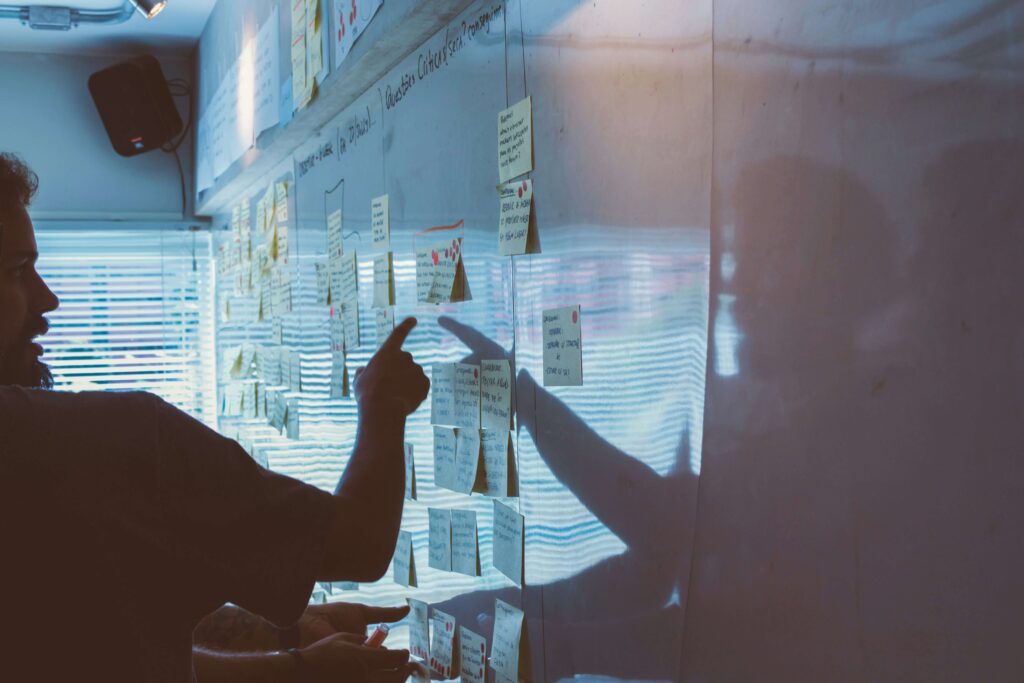
7 Leadership Trends Every Strategic COO Needs to Know
1. AI as an Operational Co-Pilot, Not Just a Productivity Tool
The strategic shift in 2026 is about moving from isolated automation to embedded intelligence across the entire operating model.
For the strategic COO, this changes COO responsibilities in a fundamental way. The question is no longer “where can we automate?” It’s “where does intelligence need to sit so the whole system can move the strategy faster?”
That means embedding AI into reconciliation, exception management, supply chain forecasting, and performance monitoring, but as part of how the operation breathes.
2. Closing the Gap Between Strategy and Reality Early
PerkFlow is built specifically for this, giving leaders real-time intelligence between strategy and outcomes so they can act before small misalignments become expensive ones.
3. Data Ownership Is Moving to Operations
Previously, data was known to be handled. The plan is usually solid, but somewhere along the line, there is a drift. This shows that somewhere between leadership intentions(strategy) and reality, there is bound to be a gap.
In most cases, it is inevitable. In 2026, one of the responsibilities of the COO is building systems to surface that gap early. Not just in the annual or quarterly reviews. This helps to correct it while it’s still manageable.
They’re not just translating strategy into execution; they’re monitoring whether execution is still aligned with the strategy days and weeks later. mainly by the analytics team. In 2026, that’s changing. Operations are increasingly taking ownership of data quality and governance.
Why? You may ask.
A data-driven COO looks at numbers and makes decisions. A data-fluent COO looks at numbers and communicates findings in a way that every department can act on.
This is a skill gap showing up across COO responsibilities in three models alike.
- The Executor needs data to pace implementation.
- The Partner needs it to align with the CEO.
- The Builder needs to know which systems are working and which aren’t.
All three need the ability to turn data into conversations people act on.
The COOs who have the most organisational impact are the ones who connect data directly to daily decisions.
4. The Operations Talent Reset
The skill set that defined a great COO five years ago is not the same skill set needed now. Technology fluency has become one of the most critical capabilities in operations.
Why? Operations teams are becoming problem-solvers.
The strategic COO doesn’t just manage workflow anymore; they ensure employees reskill, rebuild systems for better performance, and stay equipped to execute on a strategy that keeps shifting underneath them.
The talent reset is one of the most complex COO responsibilities to manage across all three models. You’re rebuilding the plane while it’s in the air.
See how organisations in logistics and banking are approaching this as they navigate execution alignment during periods of team transformation.
5. Building Accountability Without Micromanaging
There’s a tension every COO knows well: you need visibility into how the team is performing, but too much oversight kills motivation and slows people down.
They include;
- The Executor, who often pushes harder on process compliance.
- The Partner who relies heavily on trust and relationships.
- The Builder who creates structures that make accountability self-sustaining.
In 2026, the most effective approach combines all three. Clear goals. Visible progress. Minimal interference.
This as one of the defining attributes of high-performing COOs is that they build accountability into the structure of the organisation, not into their own calendar.
6. Distributed Teams Demand a New Operating Model
More organisations are running with teams spread across cities, branches, field locations, and time zones. And for organisations in operationally intensive sectors, this isn’t a future problem. It’s the current reality.
The responsibilities that worked for a one-city operation are different across different cities, keeping them aligned.
You need to create consistency without being physically present, and that means building systems.
PerkFlow’s Alignment Engine is built for exactly this, turning strategy into role-specific execution across geographies, so alignment isn’t something you hope for, it’s something you measure.
7. Managing the Gen Z Workforce
Culture has traditionally been owned by HR or the CEO. But in 2026, the strategic COO is taking on more of this responsibility, because culture is where execution either holds or falls apart.
With Gen Z’s growing share of the workforce, it is now the fastest-growing segment, and this shift is urgent. They are digital-native, purpose-driven. They want to understand the “why” behind decisions, see their progress clearly, and receive feedback continuously, not just annually.
This means redesigning accountability structures, feedback systems, and practices that this generation will actually respond to.
FAQ
What does a strategic COO do differently from a traditional COO?
It’s less about managing processes and more about owning outcomes end to end.
How does a COO know when strategy and execution are falling out of sync?
Common signals include teams hitting activity targets but missing outcome targets, recurring performance dips in the same areas, and feedback arriving too late to act on. Strategic COOs build early-warning systems so these signals surface before they compound into bigger problems.
What skills does a COO need in 2026?
Data fluency, execution intelligence, cross-functional alignment, and the ability to build accountability structures are the top skills.
How is a COO different from a VP of Operations?
A VP of Operations typically manages a specific function, e.g, logistics, supply chain, or service delivery. COO responsibilities are broader: they align all functions toward a unified strategy and are accountable for how the entire organisation executes against it.
Conclusion
COO responsibilities have grown beyond managing departments and optimising processes. Today, the job is about ensuring that the gap between strategy and execution stays small enough to close and building the systems to make that happen at scale, across every team, every level, and every location.
The seven trends in this article aren’t predictions. They’re already showing up in how the best operators are leading right now.
The question is whether your organisation has the visibility to keep up.
If you are thinking of building this kind of execution clarity across your teams, see how PerkFlow helps strategic COOs stay aligned from strategy to outcomes.
 Written by Ufan-Abasi Francis